

Built for exam preparation
We start with one exam and one syllabus, so every book, question and simulation is built around a single goal: being ready on exam day.
Neo-Link builds a daily practice plan that brings every question back right before you forget it, so what you study stays with you.
50%
forgotten within one hour
70%
forgotten within 24 hours
90%
forgotten within one week
Neo-Link is a learning platform that helps students remember what they study. It combines a focused study interface, a library of course books and a spaced-repetition engine, so every session targets exactly what the learner is about to forget.
We start with one exam and one syllabus, so every book, question and simulation is built around a single goal: being ready on exam day.

Each question is scheduled by FSRS according to how well the learner knows it. Easy material appears less often, and weak spots come back sooner.

Core and extension books, practice simulations, progress tracking and an AI assistant live in one interface, instead of separate summaries, mock tests and flashcard apps.
Without structured review, memory fades within days. People invest hours in studying and still lose most of it before the exam.
 Most study material is forgotten within daysSpaced repetition is proven, yet adoption is low and partialUnfocused study experience and unnecessary load
 Reviews scheduled by FSRS, just before you would forgetOne focused place for books, practice and examsAn AI assistant to explain what is unclear
From choosing your material to walking into the exam prepared, in six simple steps.
Add the courses and chapters you study from the library and set your exam date. Core books cover the syllabus, and extension books are there for learners who want more depth.
Every day, FSRS decides which questions to review and which new ones to learn, based on how well you remember each one. Sessions stay short and the plan adapts to you automatically.
The study screen shows one card at a time. Read the question, answer it, then rate how well you knew it, from “didn’t know” to “easy”. That rating decides when the card returns.
Questions you struggled with return more often, until the topic really sticks. Material you already know appears less, so no time is wasted on what you have mastered.
Stuck on a question? The built-in AI assistant explains it in context, without leaving the session. Extension books add depth wherever the core material is not enough.
Follow your progress, close the remaining gaps with exam simulations, and walk into the exam knowing exactly what you know and what you do not.
FSRS (Free Spaced Repetition Scheduler) is a modern, open-source algorithm that models how memory fades. It predicts how well a learner will remember each card and schedules the next review just before they would forget it, so they review less and remember more.
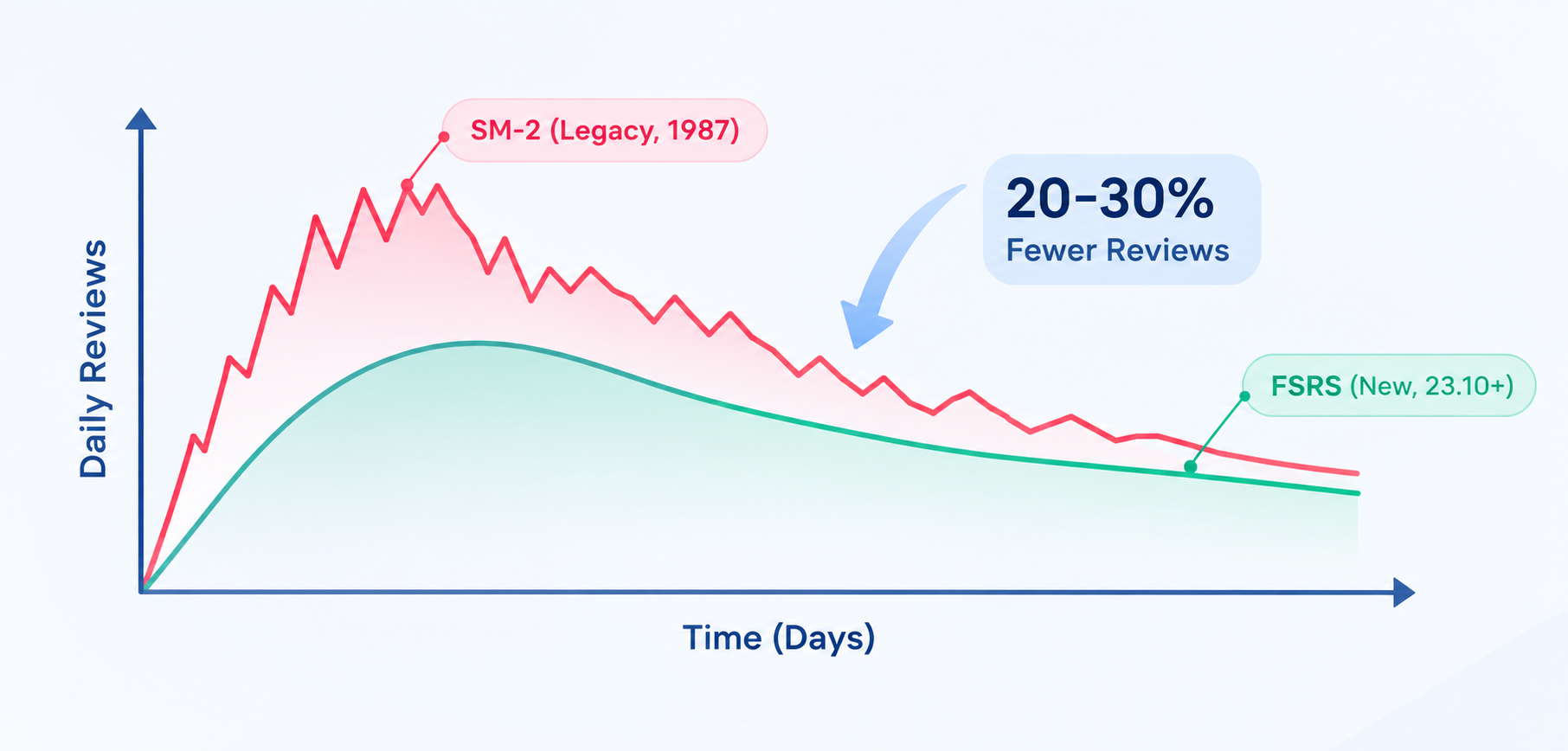

FSRS tracks each card’s difficulty, stability (how long a memory lasts) and retrievability (the chance of recalling it right now), learned from the learner’s own answers.

Reviews land at the moment recall starts to slip, not on fixed intervals. Compared with the legacy SM-2 algorithm, FSRS needs roughly 20–30% fewer reviews for the same results.

No more one-size-fits-all intervals. The model fits itself to each learner’s review history, keeping daily practice short while knowledge lasts longer.
Answers to the questions investors ask most about the product and the method.
Learners forget most of what they study within days. Neo-Link turns study time into lasting memory with a daily practice plan built on spaced repetition.
Yes. Spaced repetition has been tested in research and shows a significant improvement in learning efficiency over time.
FSRS is a modern spaced-repetition algorithm (23.10+) that replaces the legacy SM-2 (1987). It needs roughly 20–30% fewer reviews, which also makes a freemium model practical.
It is a small market, so large competitors have little motivation to enter. Users are used to paying for prep courses, the syllabus is fixed, and learners are highly motivated and consistent.
A free track plus paid annual tracks with fixed pricing per semester. The annual track is the recommended one.
Build the MVP and run a pilot with a trial course (about 20–200 users). Then expand to more courses and the wider market, followed by a full launch and a dedicated app.
The people building Neo-Link: product, algorithms, engineering and design.

Founder & CEO
A short bio goes here
CTO · Algorithms & business development
A short bio goes here
Developer
A short bio goes here
Developer & data researcher
A short bio goes here
Backend developer
A short bio goes here
Frontend developer
A short bio goes here
UX/UI designer
A short bio goes here
